
Skip to content
Clear communicationFree inspections
Call now (239) 555-0157
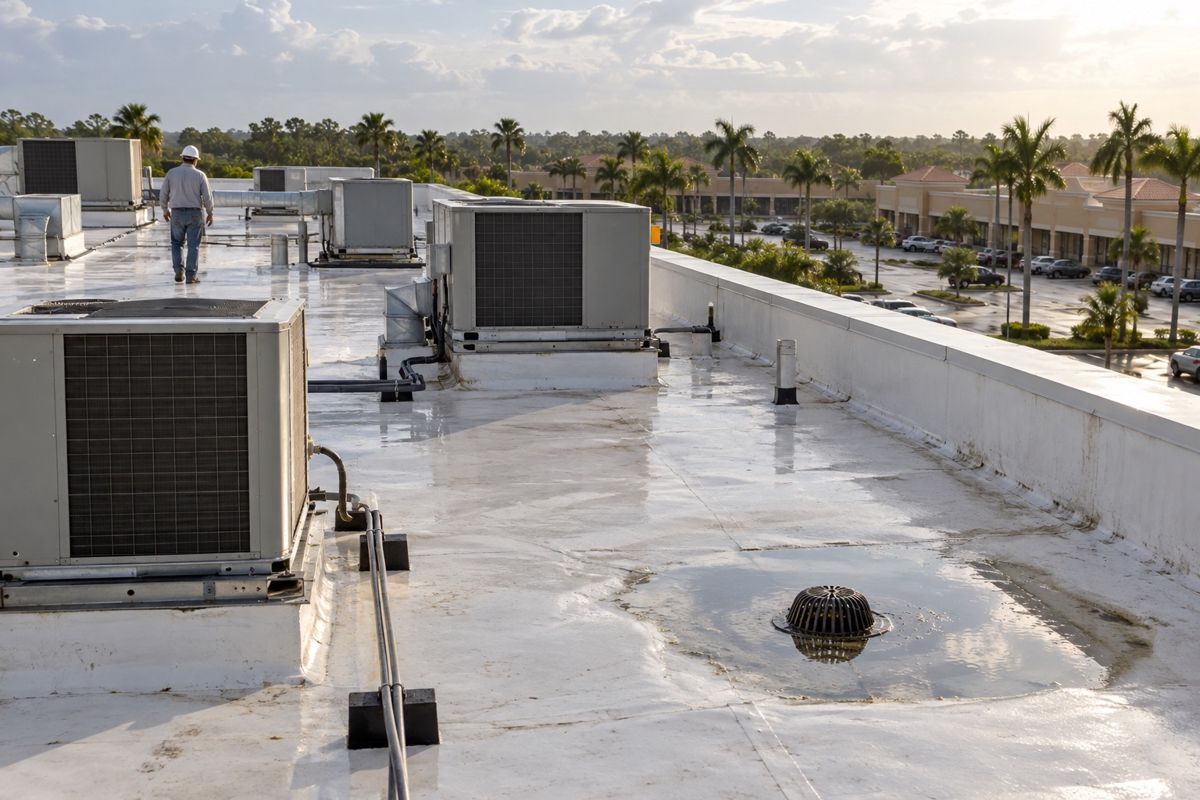
White flat membrane roof with air conditioning units on a Florida plaza

Commercial roofing

Commercial roofing in Cape Coral for plazas, offices and condos

Flat and low-slope roofs take a beating from Florida sun and storms. We assess the roof, explain the options and quote the work in writing.

  • Flat, low-slope and metal roof systems
  • Planning around tenants and operations
  • Written scope for owners and boards

Step 1 of 3

What do you need?

What kinds of commercial roofs are common in Cape Coral?

Commercial buildings around Cape Coral include strip plazas along the main roads, medical and professional offices, restaurants, condo and apartment buildings, waterfront businesses and small warehouses. Most of them use low-slope or flat roofs, with a few using metal panels or tile on pitched sections.

Common systems for low-slope roofs include single-ply membranes, modified bitumen and built-up roofing. Which one makes sense depends on the deck, the budget, the building's use and what the insurer and the local building rules allow. A good contractor explains the trade-offs in plain language before recommending a system.

Owners of mixed-use property often have both a flat main roof and pitched sections or canopies, and each part may need a different approach.

What problems do flat roofs have in Southwest Florida?

Heat, UV, humidity and heavy summer storms all work on a flat roof at once. These are the problems we see described most often:

  • Ponding water that sits for days after storms because of drainage or sagging
  • Open seams, cracked sealant and failed flashing at walls and curbs
  • Rooftop air conditioning units and vents that were added over the years with poorly sealed openings
  • Clogged drains and scuppers filled with leaves and debris
  • Membrane that has become brittle or blistered from sun
  • Edges and corners that loosen in strong wind

A roof can look intact from the parking lot while the layers underneath hold moisture. Leaks inside a tenant space are often the first visible sign.

What changes the price of a commercial roof?

Commercial roof prices vary even more than residential ones. No honest contractor can quote without seeing the building. The usual factors are:

  • Total roof area and the complexity of the layout
  • The system chosen and the manufacturer requirements that go with it
  • Whether the old roof is removed or a recover over it is allowed
  • Condition of the deck and insulation underneath
  • Number of rooftop units, penetrations, skylights and drains
  • Access, crane or hoist needs and working hours
  • Permit costs, code upgrades and any warranty terms you require

For a roof that is mostly sound, targeted repairs may cost far less than a full replacement. If the structure is old, compare repair spending against replacement before you commit. A roof inspection gives you a report that supports that decision.

Duration depends on the size of the roof, the system and the weather. Small repairs can be quick, while a full replacement on a large building can run for weeks. Permit approval, engineering review and material delivery add lead time before work begins.

Most commercial jobs are planned around the people inside. Ask how the crew will protect entrances, where they will stage materials, what hours they will work and how noise and dust will be handled. Restaurants, clinics and offices all have different needs, and the plan should reflect yours.

Owners and managers should also confirm how rain delays are handled and how the building will be protected overnight. A written schedule, even a rough one, helps everyone set expectations. For a smaller residential job, see roof repair.

When should a building owner or association call?

Call when you see interior stains, recurring leaks, water pooling on the roof, loose flashing or edges, or after a major storm. Call before an insurance renewal if the roof is old, and before you buy or sell a building so the roof condition is known.

Condo associations and homeowner boards usually need a written scope, a detailed bid and sometimes several bids to take to a vote. Bring any plans, earlier roof reports, warranty documents and maintenance records you have. They save time and help the contractor give a more accurate number.

If storm damage is the reason for the call, see storm damage repair. You can also return to the Cape Coral roofing home page to see everything we cover.

  • Clear communication
  • Free inspections
  • Written estimates
  • Local crew

Questions about roofing in Cape Coral

Do you work with property managers and condo associations?

Commercial roofing is for owners, property managers and association boards. When you call, bring the roof age, any earlier reports, warranty papers and a list of problem areas. Association work often needs a written scope and several bids for a vote, so ask for an itemized quote you can share with the board and an adjuster if needed.

Should I repair, recoat or replace a flat roof?

It depends on the condition under the surface. If the insulation and deck are dry and the membrane is mostly sound, repair or recoating can extend its life. If moisture has spread under large areas, replacement is usually the better value. An inspection with moisture checks gives you a reliable basis for the decision.

Is a permit needed for a commercial re-roof?

In most cases, yes. Commercial roof work generally needs a permit, drawings or product approvals and one or more inspections, and the building must meet Florida wind-uplift and fire requirements. The requirements vary with the building and the scope, so confirm the details with the City of Cape Coral and your contractor before work begins.

How is a commercial roof warranty different?

Commercial warranties often come in two parts. The manufacturer covers the materials under defined terms, and the contractor covers workmanship for a period. Terms, exclusions and maintenance duties vary widely, so read them before you sign. Ask for the exact language in writing and confirm what happens if the building changes owners.

Can the building stay open during roofing work?

Often it can, with planning. The crew sets safe zones at entrances, stages materials away from customers and schedules noisy work for sensible hours. Some jobs, such as tear-off over a restaurant kitchen or a clinic, need extra coordination. Talk through your operating hours early so the schedule works for your business.

How it works

  1. Call or request a quote

    Tell us what is happening with the roof.

  2. Free inspection

    A roofer checks the roof and gives a written price.

  3. Work done right

    Clean crew, nail sweep, warranty in writing.

Request commercial roofing

Tell us what you need and we call you back.

No obligation.

Step 1 of 3

What do you need?

Ready when you are

Call now or request a quote online.

(239) 555-0157