
Skip to content
Clear communicationFree inspections
Call now (239) 555-0157
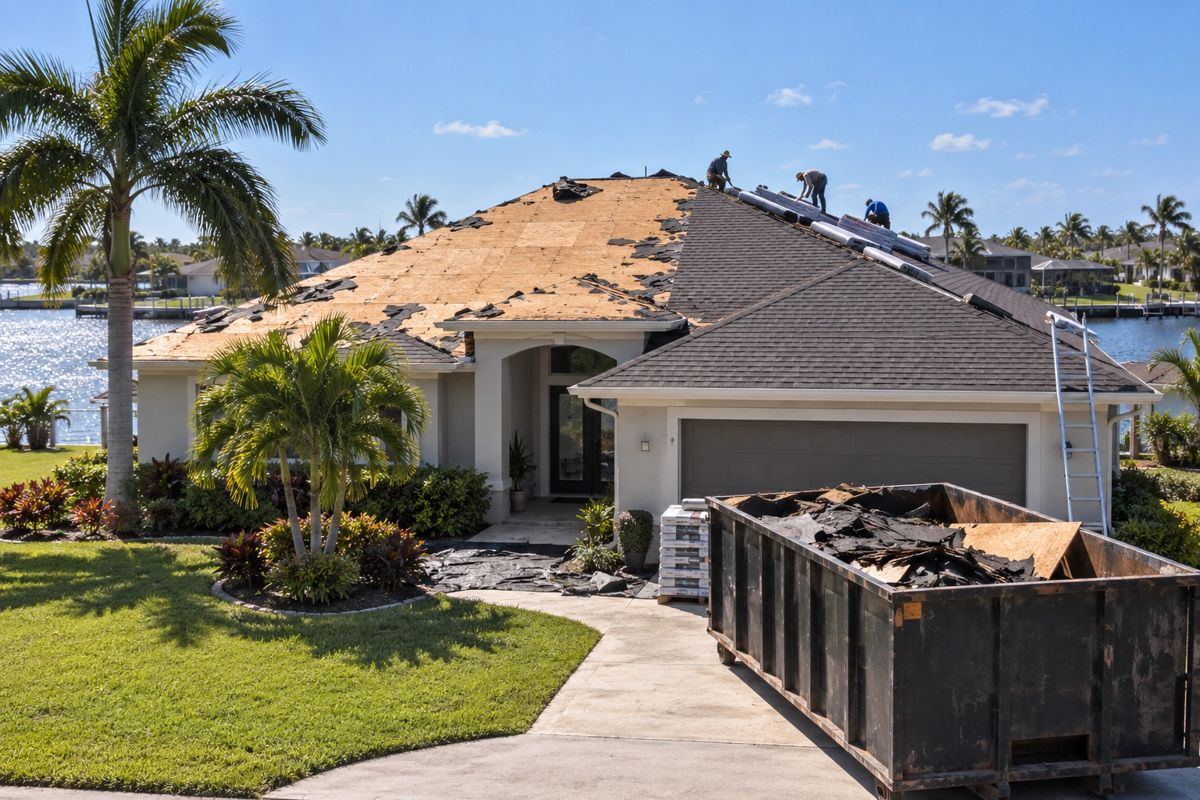
Half-stripped shingle roof on a canal-front home during replacement work

Roof replacement in Cape Coral

Roof replacement in Cape Coral, FL for tile, shingle and metal

A new roof is a big decision. We look at the deck, the underlayment and the wind details first, then put a clear scope in writing.

  • Tile, shingle and metal options
  • Permit paperwork handled as part of the job
  • Itemized written quote you can compare

When does a Cape Coral roof need to be replaced?

A roof replacement is a big decision, so start with the signs that repairs have stopped paying off. In Cape Coral the sun, humidity and summer storms age a roof faster than many owners expect, and the layer you cannot see often fails first.

Look for these signs:

  • Leaks or ceiling stains that return after repairs
  • Shingles that curl, crack or have lost granules, which show up as bare patches and grit in the gutters
  • Tile that is cracked, slipped or loose in many places, not just one
  • Daylight or damp insulation in the attic
  • Rusted fasteners or worn finish on a metal roof
  • A roof near the end of the age range its material normally reaches in Southwest Florida

Tile is a good example. The tile can outlast the felt or peel-and-stick layer under it, so a tile roof may leak even though it looks fine from the street. If you are weighing a patch against a new roof, our roof repair page explains when a repair is enough.

Tile, shingle or metal: what suits a Cape Coral home?

Each material has trade-offs on a canal-front house or a ranch home with a low-slope lanai section. Here is how they usually compare.

Concrete tile

Common on Cape Coral homes because it handles heat and wind well when it is fastened correctly. It is heavy, so the roof structure matters, and the underlayment beneath it will eventually need replacing even if the tile still looks good.

Asphalt shingle

Often the more affordable choice up front. Look at the wind rating printed on the product and ask how it will be nailed. Shingles tend to age faster in Florida sun than in cooler climates.

Metal

Standing seam and other metal panels shed rain quickly and are lighter than tile. Near saltwater, the alloy, finish and fasteners need to be chosen with corrosion in mind, so ask the installer what they would use and why.

What changes the cost of a roof replacement?

We do not quote prices without seeing the roof. These are the factors that move a quote the most:

  • Roof size and pitch, plus the number of hips, valleys and dormers
  • Material, since tile, shingle and metal sit in very different price tiers
  • Rotted or damaged decking that is found once the old roof is off
  • The underlayment system, including a sealed secondary water barrier
  • Lanai, porch and low-slope sections that need a different material than the main roof
  • Access, such as a narrow canal lot, a pool cage or limited space for a dumpster
  • Permit fees, code-required upgrades and any HOA requirements

Ask every contractor to list these items in writing so the bids can be compared line by line. Our roof inspection service can document the condition of the roof first if you want an independent baseline before you collect quotes.

Timing depends on size, material and weather. Many shingle roofs on an average single-story home take a few days of work, while tile and metal usually take longer. Permit approval and material delivery can add days or weeks before the crew arrives, and a summer storm can pause work.

On a typical work day:

  1. The crew protects landscaping, the pool area and the driveway where possible.
  2. Old roofing is torn off and the deck is checked for damage.
  3. The deck is fastened, repaired and covered with underlayment so the house is dried in.
  4. Tile, shingles or metal panels go on, along with flashing, vents and ridge details.
  5. Debris is hauled off and the work area is cleaned up.

Expect noise and some vibration, especially during tear-off. Move cars out of the driveway, take down fragile items hanging on interior walls and keep pets away from the work area.

What do hurricane codes, permits and HOAs mean for a new roof?

Florida's building code is written around wind. Depending on the age of your home and what the inspector requires, a new roof in Cape Coral may need the deck re-fastened to a tighter pattern and a sealed secondary water barrier. Homes built after the statewide code began in the early 2000s were generally built to tougher wind standards than older ones, but a roof replaced to current rules can still improve the wind details on paper.

That is why a wind mitigation report matters. Many insurers offer discounts for features such as roof shape and deck attachment, though the amount varies by company and policy.

Before you sign, confirm three things. The contractor will pull the permit and schedule the inspection. Your HOA or condo board, if you have one, has approved the color and material. Your insurance company knows about the project. If the replacement follows a claim, read about storm damage repair, or go back to the Cape Coral roofing home page for the full list of services.

  • Clear communication
  • Free inspections
  • Written estimates
  • Local crew

Questions about roofing in Cape Coral

How long does a new roof last in Cape Coral?

Lifespan depends on the material, the installation and the exposure. Shingles generally wear out sooner here than in cooler states because of heat and UV. Tile and metal usually last much longer, although the underlayment beneath tile ages sooner than the tile itself. Ask any contractor what they expect for your specific roof, and treat any exact number as an estimate rather than a promise.

Can I put a new roof over the old one?

Sometimes, but it is often not the right move. Florida code generally limits how many layers of roofing a house can carry, and an overlay hides the condition of the deck. In a hurricane area most owners benefit from a full tear-off so the deck can be inspected and re-fastened. Ask your contractor to explain which option your home qualifies for and put the reasoning in the quote.

Will my insurance company pay for a roof replacement?

Wear and age are normally treated as maintenance costs, not covered losses. Sudden damage from a covered event such as a hurricane may be covered, subject to your deductible and policy terms. Read your policy, call your insurer before you sign a contract and keep photos and written notes. A contractor cannot promise that a claim will be approved.

Do I need HOA approval for a new roof?

Not every Cape Coral neighborhood has an HOA, but many newer or gated communities and all condo associations have rules about roof material and color. Some require written approval before a permit is applied for. Check your governing documents or ask your management company, then send the request early so it does not delay the start date.

How do I get ready for a roof replacement?

Trim back overhanging limbs if you can, move vehicles and patio furniture away from the house, and cover or protect anything valuable in the attic. Take down wall hangings and fragile shelf items, since tear-off shakes the house. Tell your neighbors about the noise and let your pool service know the work dates so debris does not end up in the water.

Can a roof be replaced during hurricane season?

Yes, many are. The season runs from June 1 to November 30 and the rainy months bring regular storms, so crews watch the forecast, dry in the roof each day and may stop for weather. The schedule can slip. If a named storm approaches, work generally pauses so materials and equipment can be secured.

How it works

  1. Call or request a quote

    Tell us what is happening with the roof.

  2. Free inspection

    A roofer checks the roof and gives a written price.

  3. Work done right

    Clean crew, nail sweep, warranty in writing.

Request roof replacement

Tell us what you need and we call you back.

No obligation.

Step 1 of 3

What do you need?

Ready when you are

Call now or request a quote online.

(239) 555-0157